


From New Orleans Roots to Early Jazz Venues
Jazz clubs trace their origins back to the early 1900s in New Orleans, where music spilled out of dance halls, Social Aid and Pleasure Clubs, and the streets themselves. It was not confined to formal venues. Jazz lived in parades, neighborhood gatherings, and places like Storyville, where the energy was loose, social, and unpredictable.
Musicians like Louis Armstrong and Jelly Roll Morton helped shape a sound built on improvisation, rhythm, and personality. The setting mattered just as much as the music, with the crowd feeding off the band and the band feeding right back. It was less about watching and more about being part of it.
As jazz moved north during the Great Migration, cities like Chicago and New York became new centers of gravity. The music followed the people, and the spaces evolved with it. What started as informal gatherings began to take shape as dedicated venues, but that sense of closeness between artist and audience never really left.

The Golden Age of Jazz Clubs
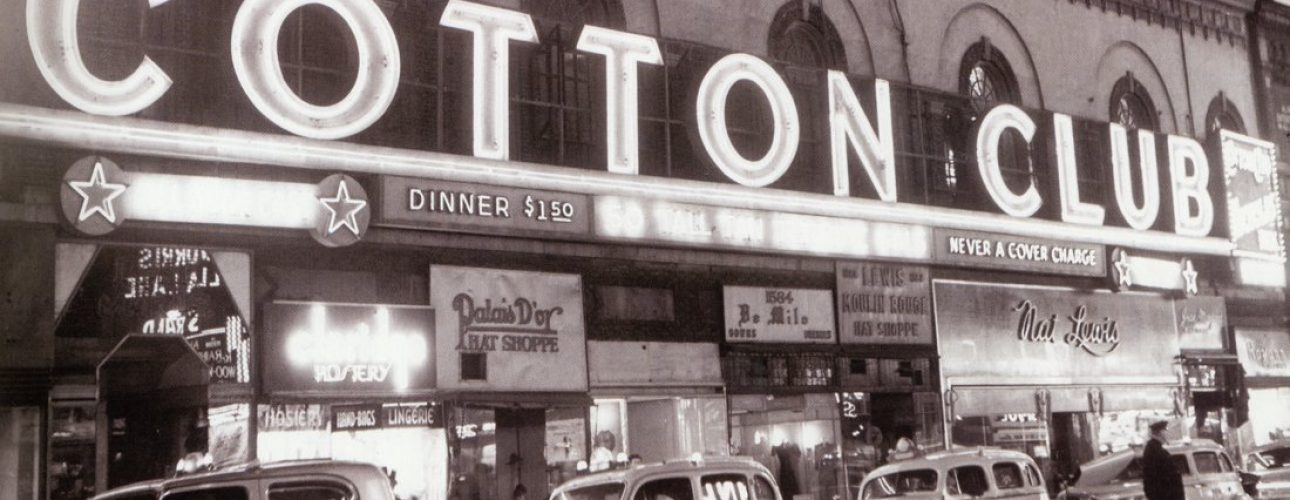
By the 1930s and 40s, jazz clubs were thriving across the country. Harlem became a focal point, though not all venues operated the same way. The Cotton Club, for example, showcased legendary Black performers like Duke Ellington and Cab Calloway, but catered to white audiences in a segregated setting. Just a few blocks away, the Savoy Ballroom offered something different, becoming one of the first racially integrated dance halls in the country and earning its nickname as the “Heartbeat of Harlem.”
This era was defined by big band swing, with music built for packed dance floors and high-energy nights. But by the 1940s, a shift was underway.
The rise of bebop changed everything. Jazz moved away from large ensembles and toward smaller groups, tighter spaces, and more complex, musician-driven compositions. Clubs like Minton’s Playhouse became late-night incubators, where artists like Charlie Parker and Dizzy Gillespie experimented freely, often in after-hours sessions that blurred the line between rehearsal and performance.
The focus shifted from entertaining a crowd to challenging both the musician and the listener. In many ways, this is where the modern jazz club atmosphere was born.
Modern Jazz Clubs and Their Evolution
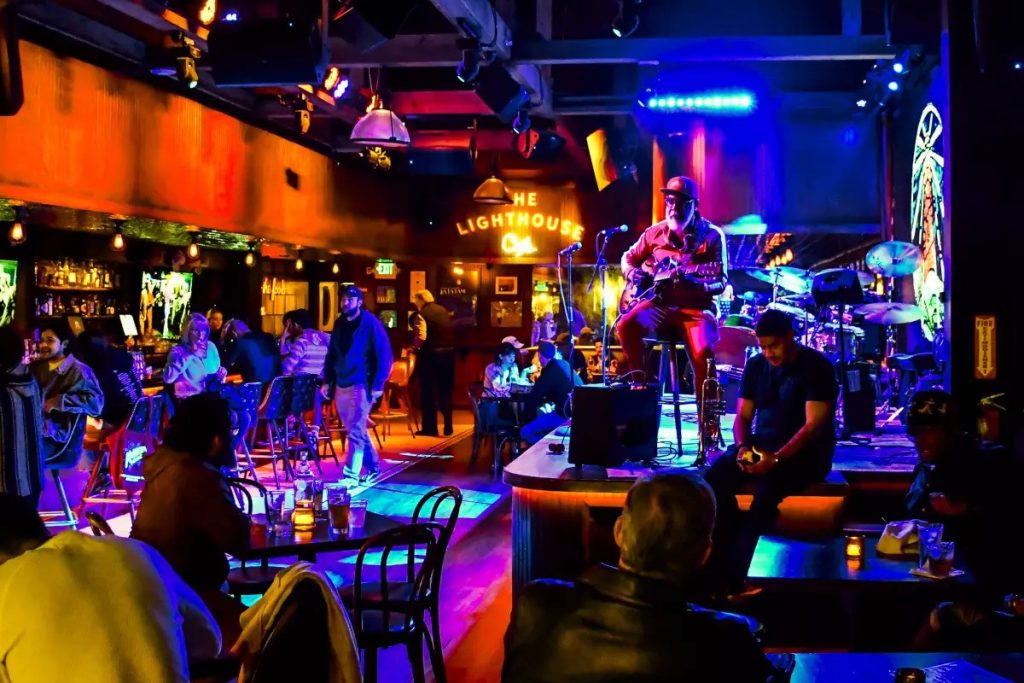
Jazz clubs today carry all of that history, but they have adapted to new audiences and new sounds. While traditional jazz still has a home, modern venues often blend genres, pulling in soul, funk, Latin influences, and beyond. The setting, however, remains consistent.
Low lighting, close seating, and an emphasis on live performance keep the experience intimate. It is less about spectacle and more about presence. The kind of place where the room quiets down just enough for you to catch every note, but never loses its edge.
Cities across the country have kept the jazz club tradition alive, each putting its own spin on it. Some lean classic and refined, others stay loose and experimental. What ties them together is the understanding that no two nights should ever feel the same.
Jazz Club Energy at Fitz and the Wolfe’s Palm Room
At Fitz and the Wolfe, the jazz club tradition finds its most natural expression inside The Palm Room, a hidden speakeasy that leans into everything that made early jazz venues unforgettable. Tucked away from the main flow, it carries that same sense of discovery that defined the best jazz spots of the past.
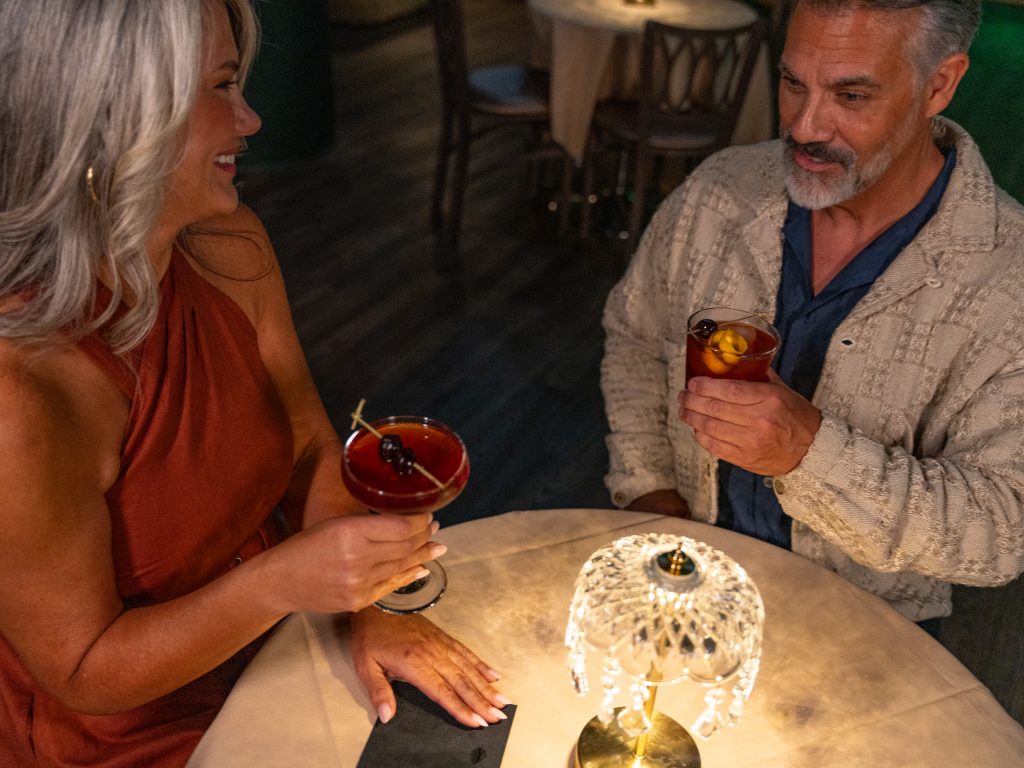
The Palm Room channels the shift that happened in the bebop era, where jazz moved into smaller, more intimate spaces built for listening as much as for atmosphere. Lighting stays low, the crowd settles in close, and the music feels personal from the first note. In Asheville, it offers a setting where jazz can stretch out a bit, whether it is a classic standard or something more modern and exploratory.
The cocktail program fits right into that rhythm. Drinks are built with intention, complementing the mood without pulling focus from the stage. It is the kind of place where one set rolls into the next, where conversations dip in and out between songs, and where the night feels like it is unfolding in real time.
Because that is what a great jazz club has always been about. Not just the music, but the environment that surrounds it. The Palm Room keeps that tradition alive in Asheville, blending history, atmosphere, and a little bit of mystery into something that feels both timeless and right on cue.